
What the Pantheon Can Teach Us About Designing Buildings That Last
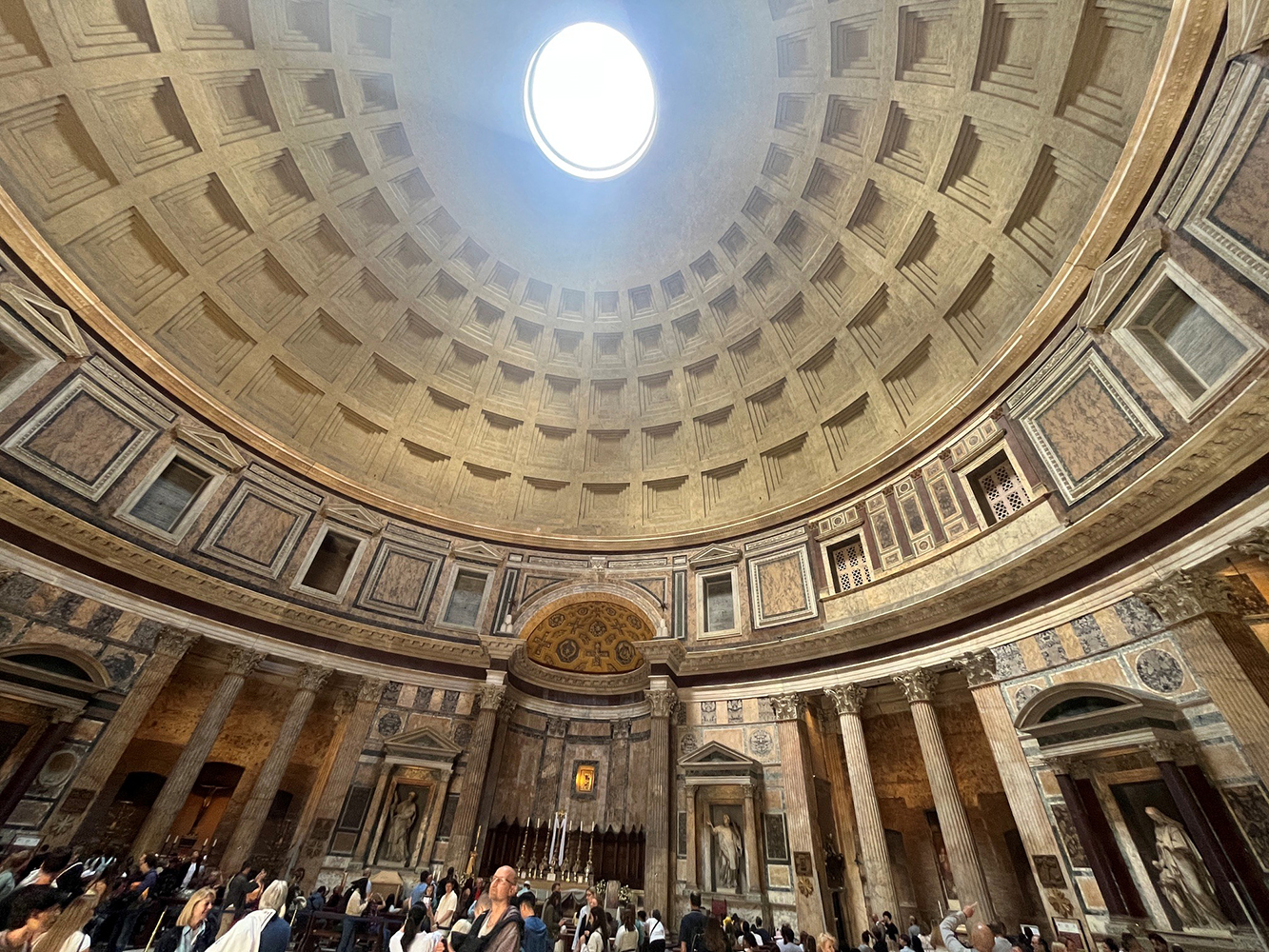
I recently visited the Pantheon in Rome. As an architect, I expected to be impressed by the scale, proportions, and engineering—and I was. What surprised me most was the simple fact that this building has been serving people for nearly 2,000 years.
The detail that stuck with me most was not the massive concrete dome or the monumental stonework. It was the door hardware. Those bronze doors have been opened and closed for centuries. Countless hands have touched them, and they are still doing exactly what they were designed to do. Meanwhile, many of us have spent time wondering if today’s door hardware can survive a busy school hallway for 10 years.
There is a lesson there.
The Pantheon raises an important question: What are we designing today that people will still value generations from now?

Modern buildings are different. They are complex systems of structure, technology, mechanical equipment, and materials that must balance performance, durability, and cost. Every project also has real constraints—budgets, schedules, codes, and client priorities.
Unlike the builders of the Pantheon, today’s architects do not have an emperor’s budget. Good design is about making the right choices. Not every component needs to last forever, but the building itself—the structure, layout, enclosure, and character—should be designed to adapt and remain valuable over time.
The Pantheon has survived because it was well designed, carefully built, maintained, and adapted. A temple became a church, and the building continued to serve because its foundation was strong enough to change.
That lesson still applies today.
We cannot predict what a building will need 50 or 100 years from now, but we can design for flexibility, durability, and long-term value. The most sustainable building may ultimately be the one that does not need to be replaced.
At the same time, successful architecture must begin with the client. Long-term value must be balanced with program requirements, budget realities, and the needs of the people who will use the building every day. Client-responsive design is one of our firm’s core principles.
The question is not simply, “Will this building last?”
It is:
“Will this building be worth keeping?”
That may be one of the most important measures of successful architecture.